Buyer's guide - internal glass doors that change how your home feels
Internal glass doors are one of the smartest upgrades a homeowner can make. They create light where there was none. They divide rooms when you need quiet, and they vanish when you need open space. This guide explains the three main types, the glass options, and the finishing details that make or break the look.
Bifold, sliding or pivot - which is right for your room?
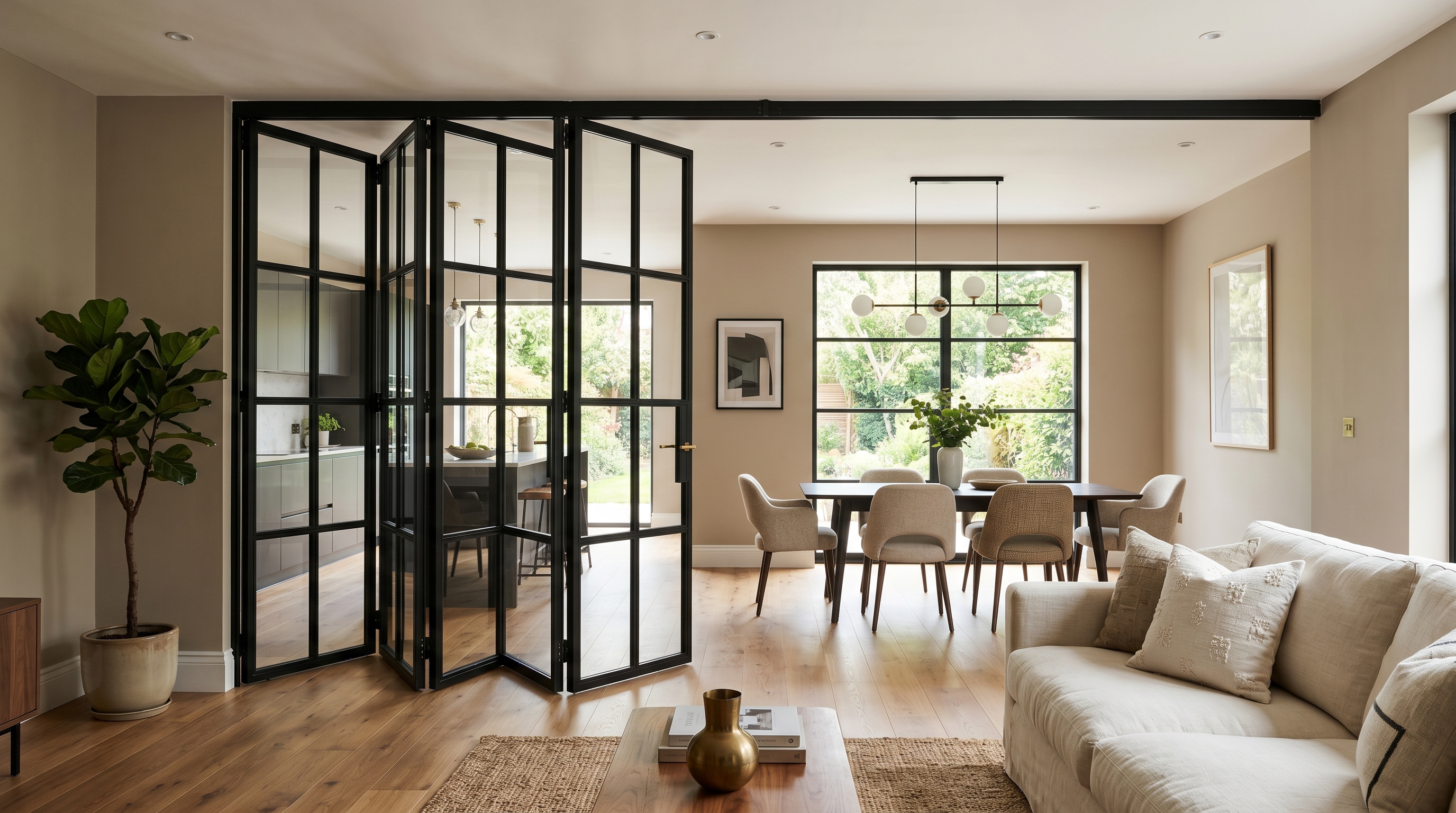
A bifold internal door folds back on itself and stacks to the side. It is the obvious choice for a kitchen-to-dining-room divide or a kitchen-to-snug. A sliding door moves sideways on a top-hung track and disappears either into a wall pocket or in front of a wall. It suits tight spaces where a bifold would block circulation. A pivot door is a single large panel that rotates around a central pivot. It is dramatic, grand, and suits a hallway-to-lounge or any feature opening. We fabricate all three.
How wide can internal doors go?
Our internal bifolds go up to 6 m wide across 2 to 6 leaves. Sliding doors can span 4 m per leaf and can stack two or three leaves to span 8 m or more. Pivot doors can be up to 1.2 m wide on a single leaf and up to 3 m tall. If you have an unusual room shape, send us a sketch.
Top-hung or floor-track?
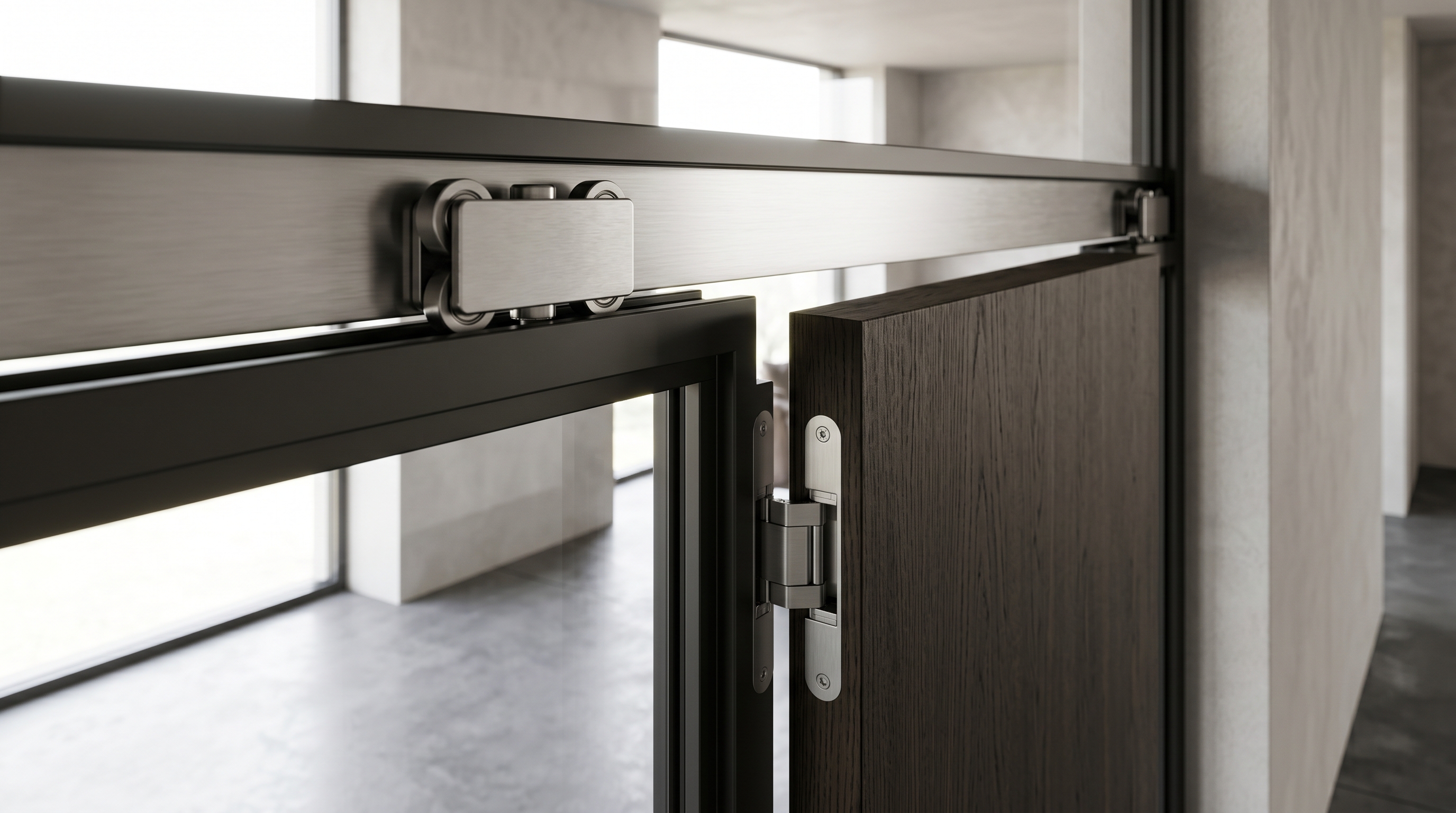
Top-hung is our default for internal doors. The entire weight hangs from a steel top track and the floor stays clear. No trip hazard, no carpet break, no dirt trap. The floor track on a bottom-rolling door is cheaper but you will find yourself vacuuming it weekly.
Acoustic glass for home working
If the room on the other side of the door is a home office, specify acoustic 6.8 mm laminated glass. It is a laminated sandwich of two sheets of glass with a sound-damping interlayer. You can be in a Zoom call with the kids screaming next door and barely hear them. It is the most-requested upgrade we sell to home workers.
Critall-style grid for the industrial look
A Critall-style door has an astragal bar grid splitting the glass into small rectangles. The look is drawn from 1920s industrial steel windows and it is the hottest interior trend of the last five years. We offer it on all internal bifolds, sliders and pivots. Jet Black frames with a Critall grid in a new-build is the classic spec.
Frameless or framed?
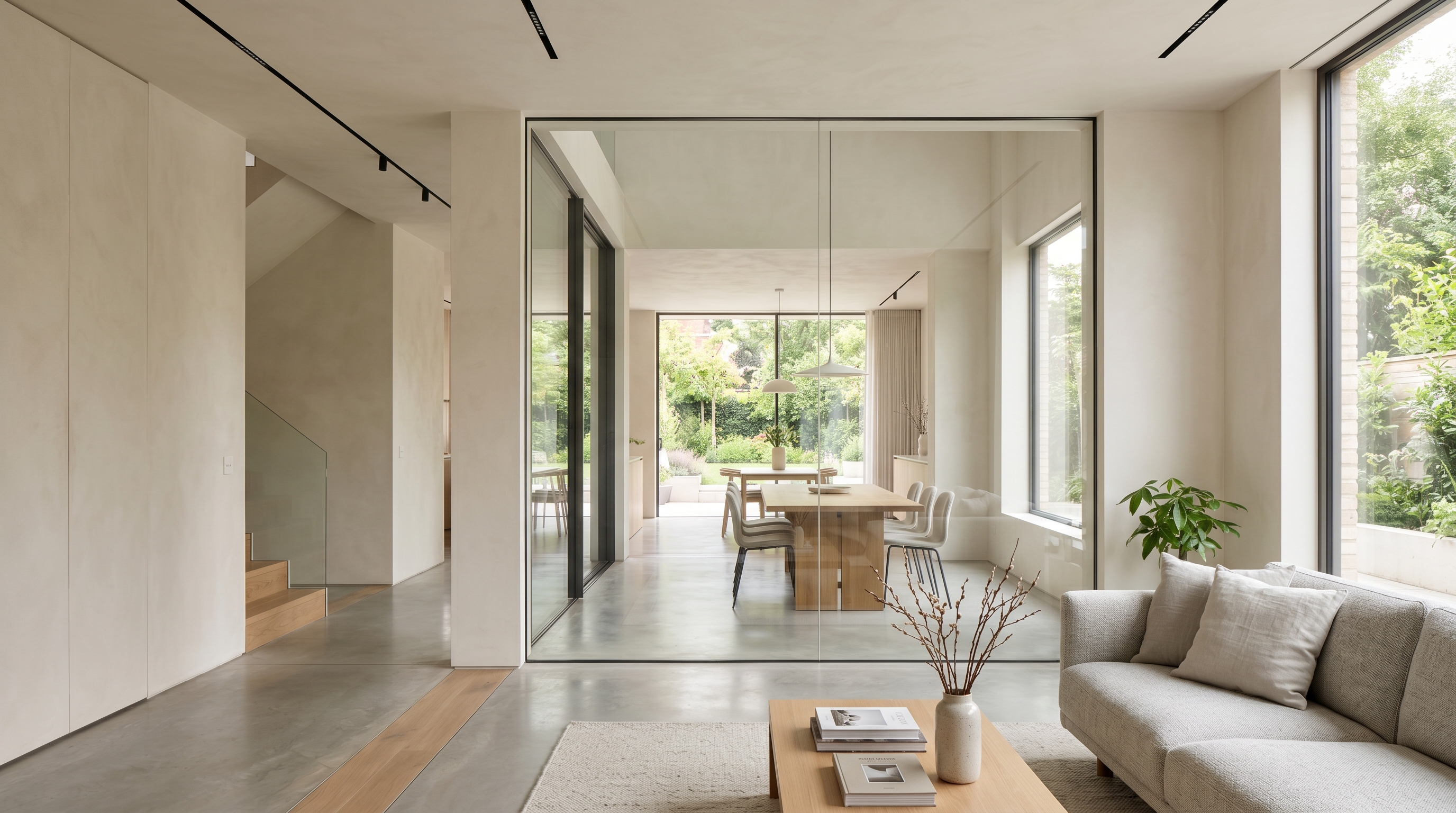
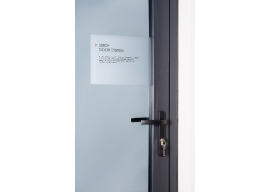
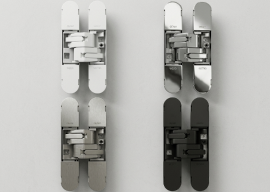
Our default is a framed aluminium system - clean but with a slim edge visible. For pivot doors we also offer a frameless toughened-glass option where the glass is the whole panel with a tiny hinge at the pivot points. Frameless looks stunning but is harder to make draught-proof, so we only recommend it on internal doors well inside the thermal envelope.
Colours and finishes
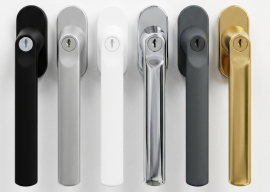
Internal doors look best in a colour that complements your wall and your flooring. Jet Black is the hero colour for Critall. Anthracite suits grey and taupe interiors. Matt White disappears against white walls. Brushed Bronze works beautifully against timber floors. We offer any RAL colour - send a photo of your floor and wall samples and we will recommend.
Soft-close and slow-close
Specify the soft-close damper option and the door slows in the last 100 mm of travel, coming to rest gently instead of slamming. A small upgrade that saves a lot of arguments in a busy house.
Installation
Internal glass doors are a half-day to one-day fit depending on size. Our team arrives, measures the opening, drops the track in, hangs the leaves, glazes them, tests the running and adjusts the dampers. You will be using the door the same evening.
Costs and lead time
Internal glass doors are usually priced per leaf rather than per m². A 3-leaf internal bifold in a standard kitchen opening starts around £2,500 supply-only, more for pivot and heavily-specified acoustic. Lead time is 3 to 5 weeks from order.
Book your quote
Use the form above. Tell us which room you want to divide and attach a phone photo on WhatsApp - tap the green upload button in the form or scan the QR code. We come back within 24 hours with a quote and a couple of layout suggestions.